"High density" is a useful thing to look for, but it's only half the story. Here's what density means, where it matters most and how to spot it on a foam grade.
What foam density actually means
Density is how much foam material is in a cubic metre, measured in kilograms per cubic metre (kg/m³).
More material generally means the foam holds its shape and support for longer than a lower-density foam used for the same job. That's why density is a good guide to durability.
On our foam grades, density is the first number. The second is the hardness rating, which is what tells you how firm it feels.
Below is an example illustrating this:
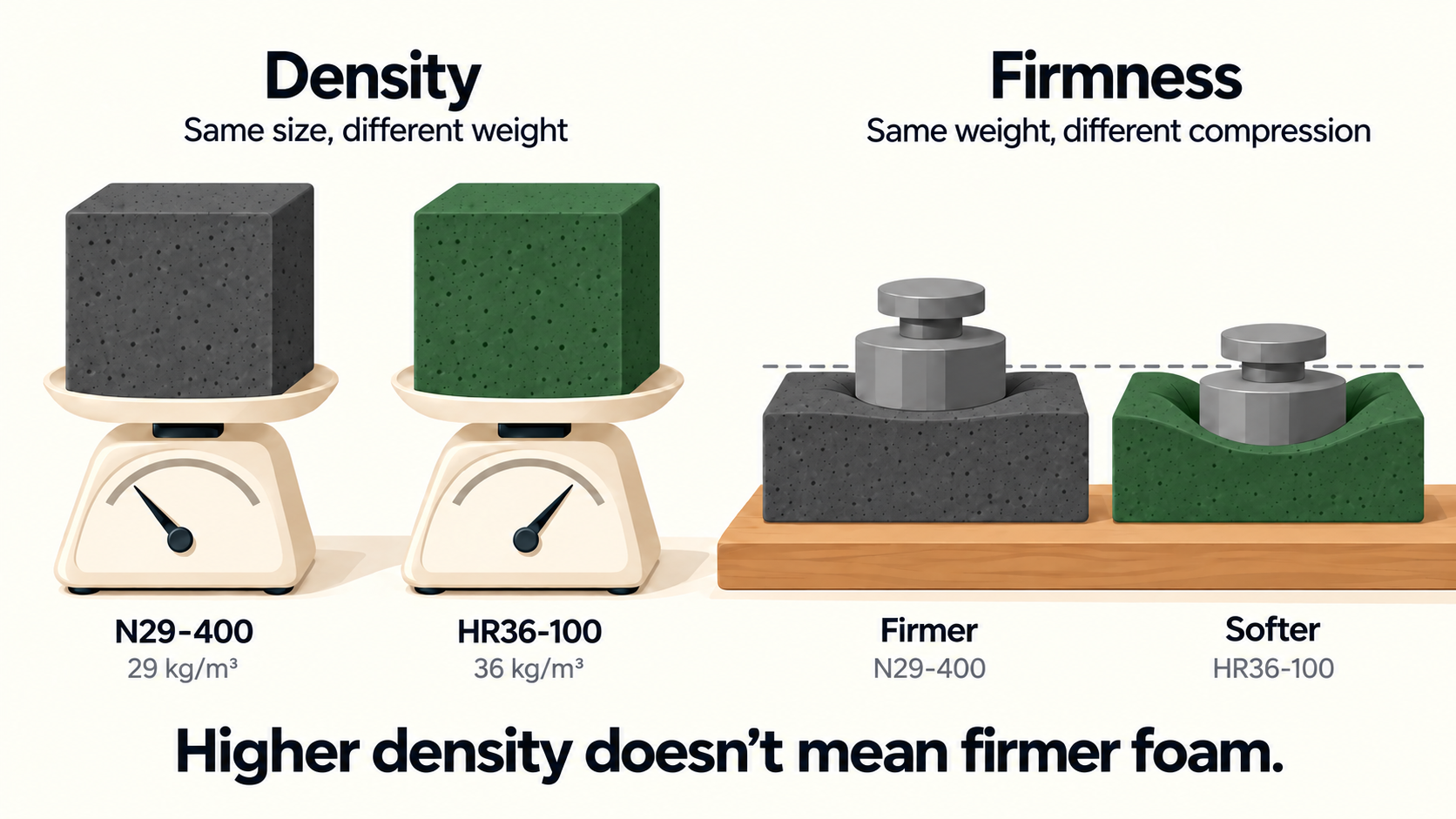
Density is the weight of the same-sized block. Firmness is how far it sinks under the same load.
Same size block, and the heavier one is the softer one. That's why a "high density" label can't tell you how a cushion will feel. For what the hardness rating means and how to compare every grade, see our foam grades guide.
N29-400
29 kg/m³ density
400 hardness rating
Lower density, much firmer
HR36-100
36 kg/m³ density
100 hardness rating
Higher density, softer
Where density matters most
The harder a cushion works, the more density earns its place.
Sofa and chair seats take the most load, so this is where a higher-density foam pays off. Choose the density for wear, then the hardness for how you like to sit.
Replacing worn seat cushions? Follow our guide to new sofa cushion inserts.
Back cushions carry less weight than the seat, so they don't need to work as hard. A softer, lighter grade is the usual starting point here.
A mattress, overlay or caravan bed gets used every night, so density matters. Check the grade suits sleeping too, rather than assuming any dense sheet will do.
See our mattress replacement guide or browse foam mattresses and overlays.
High density doesn't mean quick-drying. If a cushion will regularly cop rain, pool splashes or marine conditions, density isn't the deciding factor. Choose reticulated outdoor foam, which lets water move through it.
Buying high density foam
Once you know the density and feel you're after, you can buy a full sheet or have it cut for you. Either way, measure the cover first.
Cut it yourself
A full sheet makes sense if you're happy cutting your own pieces. Check the length and width fit everything you need.
Shop foam sheetsHave it cut for you
Enter your shape, size and what the cushion is for. The calculator shows suitable grades and your price as you go, and we deliver Australia-wide.
Design your cut foamShop foam sheets
High density foam FAQs
Not necessarily. Density and firmness are separate. HR36-100 is denser than N29-400 but much softer. Check the hardness rating, the second number in the grade code, for firmness.
Generally, yes. A higher-density grade will usually hold its shape and support for longer than a lower-density grade used for the same job.
Look at the first number in the grade code. In N31-190, for example, the density is around 31 kg/m³.
No. Seats and mattresses that get daily use benefit most. Back cushions carry less load, so a softer, lighter grade usually suits them.
Not sure which density you need?
Tell us what the foam is for and how you like it to feel, and we'll help you choose.